· by Michael Blair, Nashville's Cleaning Service
A short-term rental turnover is the clean most people underestimate. One guest checks out in the morning, the next checks in that afternoon, and in between the unit has to go from lived-in by strangers to ready for new ones. In Nashville, where a weekend can stack checkouts and check-ins on the same day, that window is the whole job. Here is what we think a turnover has to accomplish, where it tends to go wrong, and how our short-term rental turnovers are set up around it.
A turnover resets the unit for strangers
A house clean for a family keeps a home at a level the people living there already accept. A turnover has a different reader. The next guest has never seen the place, has no idea who stayed before, and judges the unit on the first things they touch: the door handle, the light switch by the entry, the faucet, the remote. The CDC’s page on when and how to clean and disinfect your home advises cleaning high-touch surfaces such as light switches and doorknobs regularly and after you have had visitors in your home. A rental has visitors by definition, so every turnover gets that pass, not just the ones after a messy stay.
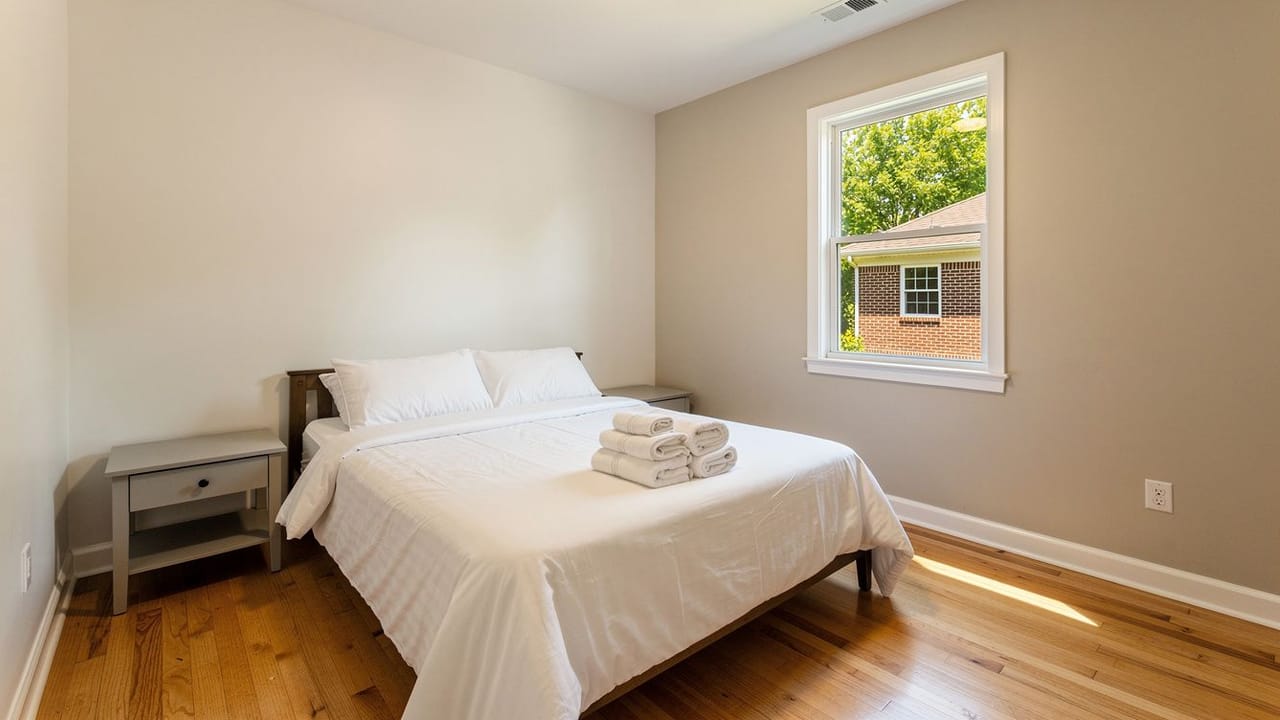
That is also why we treat a turnover as its own service and not as a shortened version of our regular visits. What a household expects from us is covered in what to expect from a cleaning service. A rental adds things no household asks for: the whole kitchen reset even if the guest barely cooked, every bed stripped whether or not it was slept in, trash out of every room, and the place left looking like nobody has been there. A slept-in bed that looks smooth is still a slept-in bed.
Clean first, then disinfect where it is warranted
A common mistake in rental cleaning is spraying disinfectant over a surface that has not been cleaned. The CDC is direct about the order: clean first, then sanitize or disinfect if needed, because dirt and grime can keep the chemical from reaching germs. A bathroom counter with toothpaste and hair on it does not get any cleaner from a quick mist and a wipe.
The second mistake is wiping disinfectant off before it has done anything. The EPA’s page on selected EPA-registered disinfectants defines contact time as how long the product has to stay on the surface to work, and says the surface should stay visibly wet for that whole time, with more product applied if it dries early. That time is printed in the label’s directions for use, along with where the product can be used, and it varies by product. On a tight turnover, this is where corners get cut, so we work in an order that lets a sprayed surface sit while we move to the next task rather than standing and waiting.
We are careful about what we promise here. The CDC notes that disinfecting beyond routine cleaning is usually not needed in a home unless someone is sick or has a weakened immune system. So a turnover from us is a thorough clean of every surface, with disinfecting on the high-touch points and the bathroom, and more of it when a host tells us a guest was ill. We do not call a unit sterile, because no honest cleaner can.
Linens, laundry and the parts guests notice
Linens are where a turnover lives or dies. The CDC’s guidance is to launder with detergent at the water temperature the item’s label recommends and to dry items completely. In a Middle Tennessee summer, with humid air and a full load of towels, that last part matters: a towel folded slightly damp and stacked in a linen closet smells of it by the next guest. Drying fully takes longer than people plan for, which is why we suggest hosts keep a second set of linens so the clean set goes on the beds while the used set is still in the dryer.
Guest count drives how much laundry a turnover carries. Metro Nashville’s short-term rental operation rules cap guests at twice the number of permitted sleeping rooms plus four, with a maximum of twelve. A three-bedroom unit can legally sleep ten, and a host stocking it should plan towels and bedding for that many, not for the couple who booked last weekend.
Floors come last in each room, after the dust and crumbs have come down off the counters and beds. The CDC lists vacuuming carpets and rugs and disposing of the dirt safely as part of routine cleaning. In a rental that means the edges under beds and the couch, where guests drop wrappers and lose earrings, not just the open floor.
- Every bed stripped and remade, slept in or not
- High-touch points cleaned, then disinfected with the label’s full contact time
- Towels and sheets dried completely before they are folded
- Trash and recycling out of every room
- Floors last, including under the furniture
What Metro’s rules put on the host, and the turnover
Nashville does not publish a cleaning standard for short-term rentals; we looked and found none on Metro’s pages. What the operation rules do set is who answers for the unit. The permit holder is responsible for guests’ conduct, and occupants have to follow the waste management and noise provisions of the Metropolitan Code. A turnover crew is often the first to see an overflowing cart or a pile of bags by the curb, so we tell the host rather than leave it for a neighbor to report.
The rules also require the name and phone number of a local responsible party, reachable around the clock during every rental, to be displayed inside the unit, and they require the unit to meet applicable building and fire safety codes. Neither of those is cleaning, but a notice that has fallen off the fridge or a fire extinguisher that has gone missing is easy to spot on a walk-through and easy to fix before a guest arrives, so we report what we see. And because Metro bars the permit holder or manager from preparing or serving food to guests, the restock we do is supplies, such as paper goods, soap and coffee filters, not anything that looks like a meal.
If you run a rental anywhere in Nashville or the towns around it and want turnovers handled on your booking calendar, ask us for a free estimate. Tell us the number of sleeping rooms, how many sets of linens you keep, your checkout and check-in times, and whether you want us restocking supplies.
Sources
- CDC, When and How to Clean and Disinfect Your Home — Clean before disinfecting; clean high-touch surfaces regularly and after visitors; disinfecting is usually unneeded unless someone is sick or immunocompromised; launder at the recommended temperature and dry completely; vacuum and dispose of dirt safely.
- US EPA, Selected EPA-Registered Disinfectants — Contact time is how long a product must stay on a surface to work; the surface should stay visibly wet for the full time; read the directions for use on the label.
- Metro Nashville Codes, Short Term Rental Property operation rules and requirements — Guest cap of twice the sleeping rooms plus four, maximum 12; local responsible party posted inside and reachable 24/7; permit holder responsible for guest conduct, waste and noise; no food prepared or served; building and fire safety codes apply.