· by Michael Blair, Nashville's Cleaning Service
We price two different services, and homeowners often hear about only one of them. The first deep clean brings a house to a baseline, and recurring visits keep it there. Skip the first and the second rarely looks the way people expected.
What does a deep clean include?
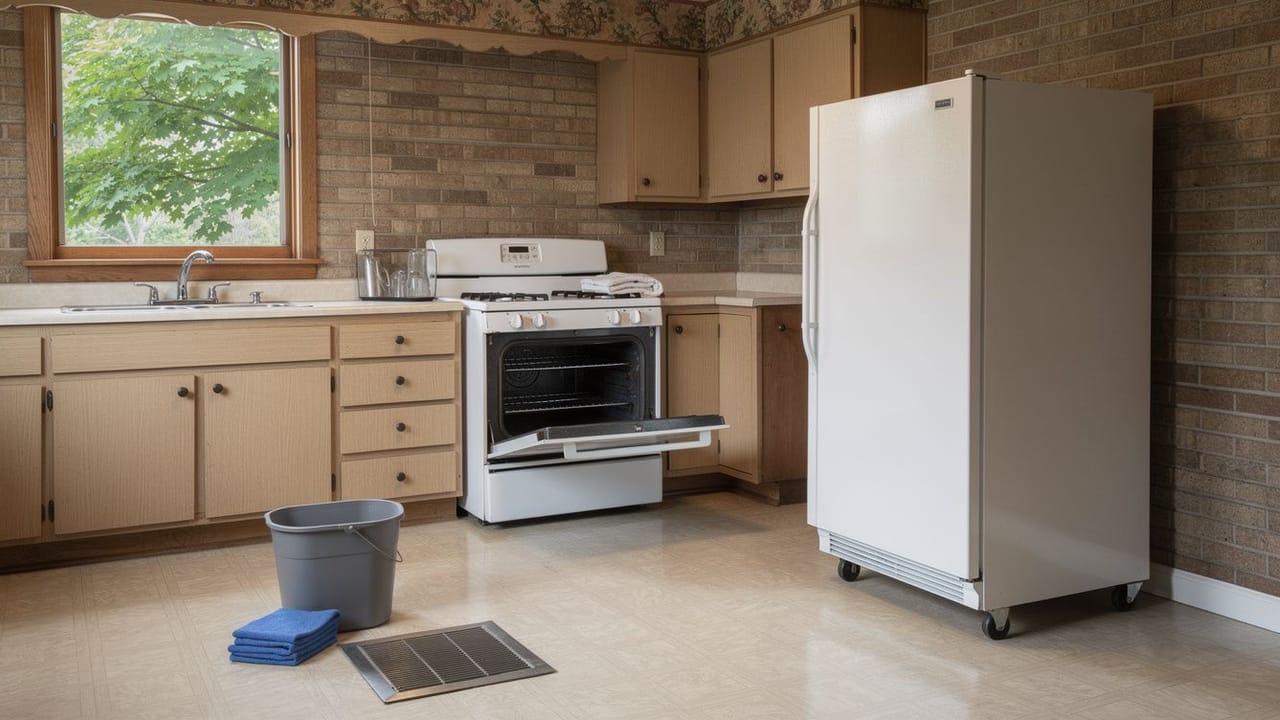
What we include is the layer that builds up over months rather than the dirt that comes back every week: inside appliances, behind and under furniture that can be moved, baseboards, door frames, light fixtures, vents, window sills and tracks, and mineral build-up on fixtures. That is the work of our deep cleaning service.
It takes us considerably longer than a maintenance visit on the same house, and the quote reflects the extra hours.
What a recurring clean covers
Surfaces, floors, bathrooms, kitchen, dusting and the visible work. Our recurring service assumes the accumulated layer is already gone, and how often to book it is a separate question, answered in our post on weekly, biweekly or monthly cleaning.
In our experience a maintenance visit on a house that has never had a deep clean spends its time on backlog and never reaches the finish people expect. Two other jobs get mixed up with both: a move-out clean adds the inside of every cabinet and drawer, and post-construction cleaning is mostly fine dust, which we take off in more than one pass.
- Deep clean: inside appliances, baseboards, door frames, vents, build-up
- Recurring: surfaces, floors, bathrooms, kitchen, dusting
- Move-out: our deep clean plus inside every cabinet and drawer
- Post-construction: fine dust, removed in more than one pass
Why do cleaning companies ask for a deep clean first?
Our recurring price assumes a known amount of work per visit. Without a baseline we would be quoting an unknown, and that usually ends with a disappointed client and a job that runs over.
So we ask for the deep clean first. It should be explained to you rather than quietly added to the bill, which is what this post is for.
Middle Tennessee specifics
Hard water is the first. Metro Water Services’ 2025 water quality report puts Nashville’s average hardness at 75.3 mg/L, with a range of 63.9 to 92.6, which falls in the band the USGS Water Science School calls moderately hard. The USGS notes that hard water can cause mineral buildup on plumbing and fixtures, and that heated water can leave solid calcium carbonate deposits. That is the scale we find on faucets, shower glass and around drains. Taking it off is slow work a maintenance visit has no time for, so we do it on the deep clean, and our hard water post goes through what is safe on which surface.
If you tackle it yourself between visits, keep bleach out of it: the CDC’s ToxFAQs on chlorine warns that mixing bleach with other household cleaners, toilet cleaners among them, can release chlorine gas.
Pollen is the other. A 2016 VUMC News piece quoting Vanderbilt allergist Jeffrey Culp puts the start of tree pollen season in mid-February, has grass pollen turning heavy about the time the trees subside in April and running into mid-summer, and ragweed lasting until October. There is no single week when it has all settled. We suggest a deep clean once the tree pollen drops off in April or after ragweed ends in the fall, and our allergy season post covers keeping it down in between. When you know which clean your house needs, ask us for a free estimate.
Sources
- Metro Water Services (Nashville), Water Quality Report 2025 — Hardness (calcium) average 75.3 mg/L, range 63.9 to 92.6
- USGS Water Science School, Hardness of Water — 61 to 120 mg/L is moderately hard; mineral buildup on fixtures; calcium carbonate deposits from heated water
- CDC/ATSDR ToxFAQs, Chlorine (reviewed 2015) — Do not mix bleach with other household cleaners such as toilet cleaners; chlorine gas can be released
- VUMC News, Steps to allergy relief as tree pollen season begins (2016) — Tree pollen from mid-February to April, grass pollen heavy into mid-summer, ragweed until October
FAQ
Deep Clean or Regular Clean, and the Difference — questions
Do I really need a deep clean first?
For a recurring service to look the way people expect, generally yes. Our maintenance price assumes the accumulated layer is already gone, and without that baseline the visit is spent catching up. Any company that asks for one ought to tell you why, and that is our reason.
How often should a house be deep cleaned?
No one schedule suits every house. With recurring service in place, the built-up layer returns slowly and an occasional deep clean keeps it in check; without one, more collects between cleans and you will want it sooner. If allergies set the timing, Vanderbilt’s allergy advice has tree pollen easing in April and ragweed lasting until October, so either point works.
What is the difference between a deep clean and a move-out clean?
Our move-out clean is a deep clean plus the inside of every cabinet, drawer, closet and appliance, done when the house is empty and everything can be reached. It takes longer and is priced accordingly. Book it when a house is being handed back to a landlord or over to a buyer.
How much should a deep clean cost?
More than a regular visit on the same house, because a deep clean takes considerably longer and our quote reflects those extra hours. The amount of buildup moves the number most: inside the appliances, behind movable furniture, on baseboards, vents and sills, and the hard-water scale on Nashville faucets and shower glass, which is slow to remove.