· by Michael Blair, Nashville's Cleaning Service
Most houses change hands clean enough to pass a walkthrough. The seller or the last tenant wiped the counters, vacuumed and swept the garage, and the rooms look fine with the lights on. Then the movers carry in the dishes and the clothes, and the new owner finds crumbs in the silverware drawer, a dusty shelf in the hall closet and a gray line along every windowsill. A clean before move-in is aimed at exactly that: the places nobody cleans for a showing and nobody can reach again once the boxes are unpacked. This is what our move-in and move-out cleaning covers on the move-in side, and what it leaves out.
Is a move-in clean worth it if the house already looks clean?
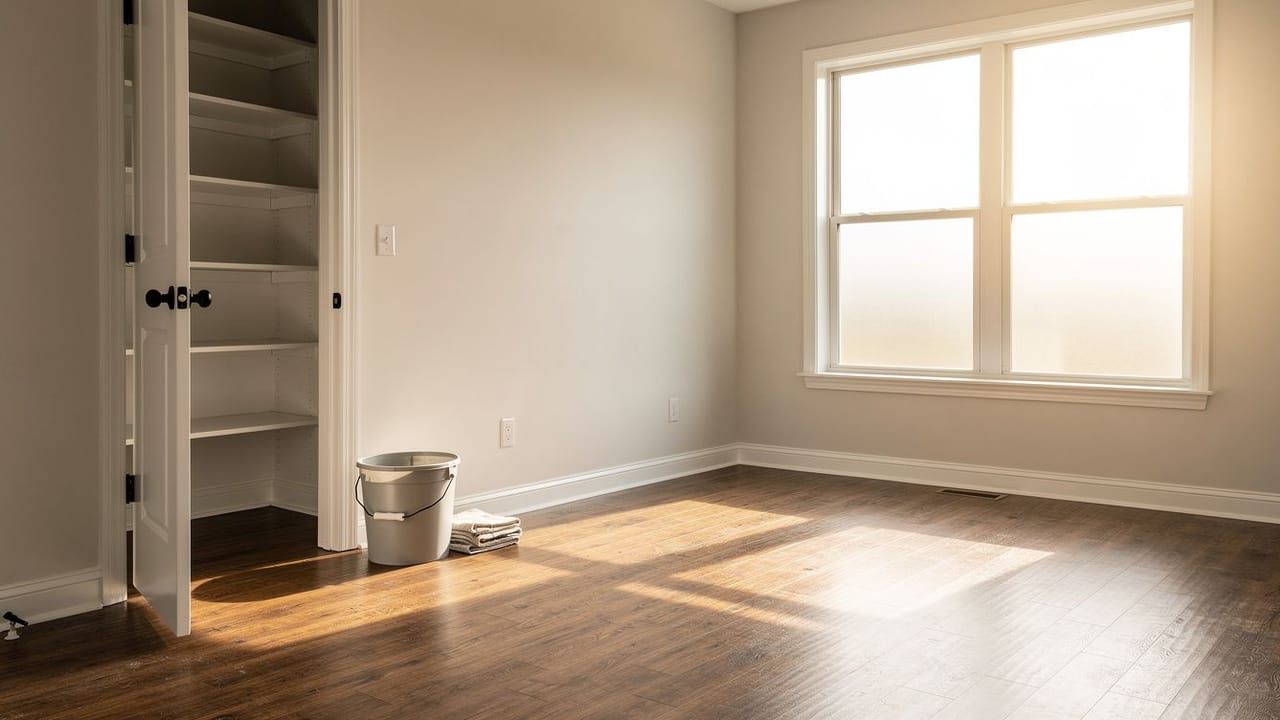
Yes, because a house that looks clean has usually been cleaned for whoever was leaving it, not for the person moving in. A move-out clean is judged by a landlord’s inspection or a buyer’s final look, and our move-out cleaning checklist is written for that. It aims at what someone checking the house will notice. A move-in clean aims at what you are about to touch every day: the shelf where the plates go, the drawer that will hold forks, the closet rod your shirts will hang from.
It is also the only time the work is quick. In an empty house a cloth can go into every cabinet in a few passes. Three weeks later the same job means emptying each cabinet onto the counter first, so in practice it never happens.
What should be cleaned before moving into a house?
Clean the inside of everything that will be filled, then the surfaces, then the floors, working from high to low so nothing falls onto a finished area. We take a house in this order:
- Kitchen and bath cabinets, drawers and the pantry, inside and out, including shelf edges and hinges
- Closet shelves, rods and the top of each closet door frame
- Inside the oven, the refrigerator and the dishwasher door gasket
- Light fixtures, ceiling fan blades and the tops of window and door trim
- Windowsills, window tracks and the wells behind the sash
- Baseboards, switch plates and door handles
- Bathrooms: tub, shower, toilet base and the floor behind it
- Floors last, vacuumed and then mopped
Why do windowsills and window wells matter in an older house?
They can hold the dustiest material in the house, and in an older home with lead-based paint on the windows that dust can contain lead. The National Institute of Environmental Health Sciences notes that lead-based house paint was banned in 1978, that old paint can chip and turn to dust, and that dust is the most common way people in the United States are exposed to lead. EPA’s guidance for families worried about lead contamination in their neighborhood says windowsills and wells can contain high levels of leaded dust and should be kept clean, and it advises wet-mopping floors and wet-wiping window components and other flat surfaces. Damp cloths hold the dust where dry dusting can lift it back into the air.
Nashville has a lot of older houses, so we treat every sill this way rather than guess at a house’s paint. We wet-wipe the sills and wells on every move-in and change the cloths often. A move-in clean is not lead testing, though. If the paint is peeling or the house is being renovated, that is a job for a certified inspector or risk assessor, and our post on cleaning up after a remodel covers dust from work in progress.
Ducts, damp closets and a house that sat closed
The air ducts usually do not need cleaning just because the house changed hands. The EPA page on whether to have your home’s air ducts cleaned does not recommend routine duct cleaning, only cleaning as needed, and it says no one has shown that cleaning ducts prevents health problems. The cases it names are substantial visible mold inside hard-surface ducts, ducts infested with rodents or insects, and ducts clogged with so much dust and debris that particles blow out of the supply registers. A change of owners is not on that list. We vacuum and wipe the register covers and return grilles as part of the clean, and if we see one of those conditions behind them, we tell you before the furniture goes in.
A house that sat empty through a Middle Tennessee summer with the air conditioning off or set high can come back with a musty closet, a spotted ceiling over a shower or growth under the kitchen sink. EPA’s brief guide to mold, moisture and your home says mold on hard surfaces can be scrubbed off with detergent and water and dried completely, and that most people can handle an area smaller than about 10 square feet themselves. A larger patch, or growth after a lot of water damage, needs EPA’s fuller guidance and usually a specialist. The same guide says not to paint or caulk over mold, and to hold indoor humidity under 60 percent, with 30 to 50 as the target.
So on a move-in we open every cabinet under a sink, every closet and the laundry space, and we report anything that looks like a leak rather than just wiping it away, because EPA puts fixing the water first. Running the cooling for a few days before move-in helps a closed-up house dry back out. We clean houses for new owners and tenants in Mt. Juliet, across Wilson County and around Nashville. To book a clean between closing and the moving truck, send us the address and the move date.
Sources
- US EPA, Should You Have the Air Ducts in Your Home Cleaned? — Duct cleaning not recommended routinely, only as needed; never shown to prevent health problems; clean for substantial visible mold, vermin or ducts clogged with dust and debris
- US EPA, A Brief Guide to Mold, Moisture and Your Home — Scrub mold off hard surfaces with detergent and water and dry; areas under about 10 square feet; do not paint or caulk moldy surfaces; indoor humidity below 60 percent, ideally 30 to 50 percent
- US EPA, What can I do to protect my family from lead contamination found in my neighborhood? — Wet-mop floors and wet-wipe window components and horizontal surfaces; windowsills and wells can contain high levels of leaded dust
- National Institute of Environmental Health Sciences, Lead — Lead-based house paint banned in 1978; old paint chips and turns to dust; lead dust is the most common route of exposure in the United States
FAQ
Move-In Cleaning Before the Furniture Arrives — questions
What is a move-in cleaning?
It is a thorough clean of an empty house before your belongings arrive, aimed at the inside of everything you are about to fill: cabinets, drawers, the pantry, closet shelves, the oven and refrigerator, plus sills, trim, baseboards, bathrooms and floors. It reaches places a seller’s or tenant’s move-out clean usually skips because nobody inspects them.
Should you clean inside cabinets before moving in?
Yes. Kitchen and bath cabinets, drawers and pantry shelves collect crumbs, dust and spills that nobody looks at during a sale or a lease inspection. In an empty house they take minutes to wipe, while after move-in each one has to be emptied first. We clean them inside and out before anything else.
How do you clean a house before moving furniture in?
Work from the inside of storage outward and from high to low: cabinets, drawers and closets first, then light fixtures, fans and trim, then sills, window tracks and baseboards, then bathrooms, and floors last. That order keeps dust from falling onto areas already done and leaves clean floors for the movers to walk in on.
Do I need to clean the air ducts before moving in?
Usually not. EPA does not recommend routine duct cleaning and names three reasons to do it: substantial visible mold inside hard-surface ducts, ducts infested with rodents or insects, or ducts so clogged with dust that particles blow out of the registers. Cleaning the register covers and return grilles is normally enough.