
· by Michael Blair, Nashville's Cleaning Service
A move-out clean gets judged against a checklist by someone with a reason to look closely: the landlord deciding how much of the deposit comes back, or a buyer walking the house before closing. The things landlords commonly check are mostly places a weekly clean never reaches, which is why our move-in and move-out cleaning is quoted as its own job.
The commonly missed items
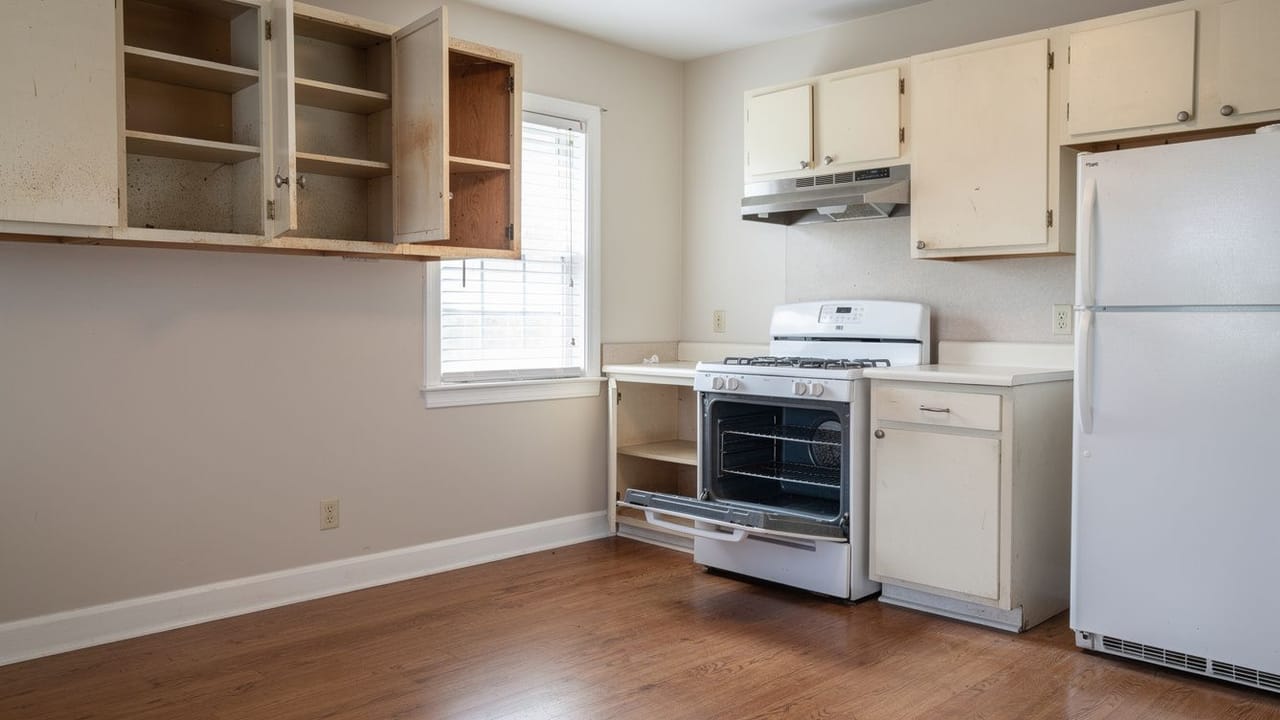
We start inside the oven, racks and door glass included, then the refrigerator inside and out. It comes away from the wall as well, since the floor and wall behind it gather dust nobody sees. On older models ENERGY STAR’s refrigerator guidance says to keep the condenser coils clean and to check the user’s manual for how to do that safely, so the manual decides how we handle the coils.
After the kitchen come the range hood filter, baseboards and door frames, window tracks, blind slats, light fixtures and their bulbs, and the inside of every cabinet and drawer. From the middle of a room none of that looks dirty, and that’s why it gets skipped. The fuller picture of what goes beyond a routine visit is in our post on deep cleaning versus a regular clean.
Walls and marks
Scuffs and nail holes are where a lot of deposit arguments start. What counts as normal wear depends on your lease and your landlord. Many treat a few small picture-hook holes as ordinary, while wall anchors, large holes, TV-mount holes and heavy scuffing are more likely to show up as a charge, so read the lease and ask before you assume.
Filling small holes and touching up the paint yourself can cost less than being charged for it. In a house built before 1978, go carefully: EPA’s page on reducing lead exposure at home says older homes are more likely to have lead-based paint, advises fixing small damaged areas without sanding, and says to wet the surface first if you have to sand. Renters can check the lease packet, because EPA’s lead-based paint disclosure rule requires landlords of most pre-1978 housing to disclose known lead-based paint before the lease is signed.
- Oven inside, racks and door glass
- Refrigerator inside, plus the wall and floor behind it
- Range hood filter degreased
- Every cabinet and drawer, inside
- Window tracks and blind slats
- Baseboards, door frames and light fixtures
Does a move-out clean include the garage and yard?
Sweep the garage and deal with the oil spots, clear the patio and walkway, wash out the trash and recycling carts, and haul off anything left in the yard.
These get forgotten because the cleaning happens indoors, yet a walkthrough can take in the garage and yard as well as the rooms. Go easy with the hose on that oil stain. Metro Water Services’ stormwater page explains that runoff picks up oils and antifreeze from cars and gets no treatment before it is released into the environment, so blot and scrub the stain instead of washing it toward the street.
Should you take photos after a move-out clean?
Photograph every room, every appliance interior and any damage that was already there, after the clean and before you turn in the keys.
If a deduction is disputed later, dated photos show the condition you left the place in, and a phone is all it takes. If you would rather hand the whole list to someone else, request an estimate for a move-out clean.
Sources
- ENERGY STAR, Refrigerators — Allow air circulation behind the refrigerator; keep condenser coils clean on older models and follow the user’s manual for safe coil cleaning
- U.S. EPA, Reduce the Risk of Lead Exposure at Home — Pre-1978 homes more likely to have lead-based paint; fix small areas without sanding; wet the area first if you must sand
- U.S. EPA, Real Estate Disclosures about Potential Lead Hazards — Landlords of most pre-1978 housing must disclose known lead-based paint before a lease is signed
- Metro Water Services, Stormwater Management — Runoff picks up oils and antifreeze from cars and receives no treatment before release
FAQ
What a Move-Out Clean Has to Cover — questions
What gets people charged at move out?
Landlords commonly check the oven, the refrigerator, the range hood filter, window tracks and marks on the walls. All of them sit outside a normal cleaning routine, which is why they get missed. Photos of the finished state taken before you turn in the keys give you a record to point to if a deduction is disputed.
Are nail holes normal wear and tear?
It depends on the lease and the landlord. Many treat a few small picture-hook holes as normal wear, while wall anchors, large holes, holes from mounted televisions and heavy scuffing are more likely to be charged. Filling and touching up before you leave can cost less than paying for it afterward. In a home built before 1978, EPA advises fixing small areas of paint without sanding, or wetting the surface first if you must sand, because older paint may contain lead.
Should I hire a professional move-out clean?
It makes sense when time is short or the list is long, and it can head off a charge for something you would have missed. Ask for the quote against a written list of what is included, so you can compare it with what the lease asks for. If you do it yourself, work from a written checklist and not by eye, since the items that get flagged are often the ones that do not look dirty.
How clean should a house be when you move out?
Clean to the standard of the final walkthrough, which is stricter than a weekly clean: inside the oven, refrigerator and every cabinet and drawer, the range hood filter, window tracks, blind slats and baseboards, plus the garage, patio and trash carts. Then photograph every room so there is a dated record of the condition you left.